Introducing the all-new DJI FC100, with a payload capacity of up to 85 kg[1], dual battery and support for two payload systems. It integrates seamlessly into a robust development ecosystem, redefining professional delivery missions and pushing operational boundaries. The intelligent and advanced safety system allows uninterrupted deliveries from the mountains to the oceans, opening up unlimited possibilities.
Greater load, superior performance
It carries larger loads and reaches further, achieving an ideal balance between high performance and energy efficiency. Experience efficient delivery.
85 kg
Maximum payload
with dual battery[1]
12 km
Maximum flight distance with take-off weight 149.9 kg[2]
82 kg
Maximum thrust per axis
32%
Improved energy efficiency[3]
Supports single and dual battery operation
Maximum payload 100 kg with one battery[1]
Maximum payload 85 kg with two batteries[1]
Coaxial double rotor
Compact size, high loading capacity. The powerful propulsion system offers improved safety, with propeller immobilisation protection for added safety and reliability.
62 inch carbon fibre propellers
Carbon fibre propellers offer greater rigidity and lighter weight, and can resist deformation even at high temperatures. With an optimised airfoil and a larger propeller diameter, energy efficiency is improved. The upper engines are equipped with propeller clamps, which reduce propeller vibrations for a more stable flight.
Engine and ESC
Bigger engines, more torque. The ESC with 420A current ensures stable and reliable operation, providing faster response times.
The FC100 supports 2 load systems, including the brand new top winch system equipped with an electric hook for efficient loading and unloading. It is also compatible with the DJI dual-battery lift system, flexibly adapting to different delivery scenarios.
DJI FlyCart 100
Top winch system
Electric hook
Electric opening and closing[4]
Wireless charging[5]
Comfortable and hassle-free
Real-time weighing
Avoiding overload, facilitating management and clearance
Audio and visual alerts
Safe loading and unloading
High-speed release and recovery
The winch system offers both automatic and manual release and retrieval options. It has a rope length of 30 m and maintains a retraction speed of 1.2 m/s even with heavy loads, ensuring efficient and reliable operation.
Safe unloading
The load is automatically released on contact with the ground and the hook can be remotely controlled for opening, ensuring safe and accurate delivery.
Automatic balance control
The combination of a triaxial force sensor and intelligent algorithms minimizes load swing and improves stability.
Ejection of the escape cable
In extreme situations, when the hovering load gets trapped or tangled, the cable can be completely discarded with a single click, instantly releasing the drone.
DJI lift system with dual battery
Automatic balance control
Minimize swinging with a single click for smooth delivery
Escape by cutting rope
One-click heating and melting of the rope, releasing the drone for safe disengagement
Real-time weighing
Avoiding overload, facilitating clearance
Deliveries with ease in complex environments
The DJI FC100’s intelligent safety system is equipped with new LiDAR, millimeter wave radar[6] and the Penta-Vision system. These features offer a comprehensive perception of the environment, allowing accurate obstacle detection[7].
LiDAR
Capable of capturing dense spatial point clouds of up to 300,000 points per second, providing detailed imagery of complex terrain. It can detect obstacles more clearly than FPV during night operations.
Millimetre-wave radar
The front radar performs 5,000 vertical sweeps per second combined with 360° horizontal mechanical rotation, while the lower and rear radar offer a more comprehensive detection field.
Penta-Vision system
The quad optical system, combined with the full-color low-light FPV camera, allows unobstructed observation of flight scenes forward, backward, left, right and down, detecting obstacles with greater intelligence.
Night navigation lighting
New high- and low-beam front lights and a lower auxiliary light ensure safer night-time operations.
DJI AirSense[8]
The integrated ADS-B module detects and warns of nearby manned aircraft.
Integrated protection throughout the entire operation
From take-off to landing, in tactical or emergency situations, the DJI FC100 provides comprehensive protection for personnel, drones and cargo in any environment.
AR security assistance[9]
During takeoff and landing, the DJI FC100 supports pedestrian and vehicle detection with AR. In addition, the Return-to-Home function activates a landing point view for improved guidance and safety during ground contact.
Automatic climbing on a slope
Real-time ground awareness ensures that the aircraft maintains at least the minimum height above the ground as defined by the predefined safety limits. Safe flight in complex terrain.
Avoiding obstacles to cargo[7]
Innovative obstacle avoidance algorithms ensure that the aircraft and its cargo can avoid obstacles, effectively reducing the risk of getting stuck in complex scenarios.
Flight without pitch[23]
It now supports pitch-free flight, improving stability in crosswinds and enhancing the performance of fail-safe control in the event of loss of power.
Built-in parachute
The integrated parachute has a multi-level reserve and can be deployed at low altitude under maximum take-off weight conditions, effectively slowing the aircraft’s landing speed and minimising the risk to people and property.
High performance cover
Corrosion resistant, low air permeability
Independent control
Independent power supply, independent storage
Multiple protection
Intelligent self-starting power control, the propellers stop before the parachute opens
Safety and reliability
The landing speed can be reduced to 7 m/s[10]
Delivery beyond the limits
The DJI FC100 underwent multiple reliability tests, including high and low temperature operation, aerodynamic tunnel testing, winch release and recovery tests, electric hook opening and closing tests, and parachute deployment tests. Through rigorous testing, the drone can fly in extreme conditions.
6000 m
Maximum flight altitude[11]
12 m/s
Resistance to maximum wind speed[12]
IP55
Inflow protection class[13]
-20° to 40°C
Operating temperature[14]
Ultra-fast charging, efficient operation
The DJI FC100 supports ultra-fast charging and allows hot-swapping for continuous and uninterrupted flights.*
(*Accessories may vary by region, please consult your local dealer for more details.)
Smart flight battery DB2160
Ultra-fast charging
High battery capacity
Triple air duct design for cooling
Dual battery backup
In dual-battery mode, the two batteries act as a backup for each other. If one battery fails during flight, the other keeps the drone in flight, avoiding accidental shutdown.
Battery hot-swapping
In dual-battery mode, hot-swapping is enabled for continuous and uninterrupted flights.
Battery heating[15]
In low temperatures, the battery is heated to the ideal operating temperature using the DJI Battery Heater, allowing the battery to continuously retain heat for consistent performance even in extremely cold regions.
Multiple charging systems,
Adapted to different charging scenarios
Power system accessories vary by country. Please contact the authorized DJI dealer in your area for more details.
Smart charger C12000
Three-phase power input
Fast charging 12,000 W[17]
Adaptive power protection
Charging cable 1,8 m
Smart charger C10000
Single-phase power input
Fast charging 9,000 W[17]
Adaptive power protection
Charging cable 1,5 m
Multifunctional D14000iE generator inverter
Fast charging 11,500 W[16]
AC output 1.500 W
Charging cable 1,8 m
Easy handling, stable transmission
The DJI RC Plus 2 features a 7-inch high-brightness display and supports Dual Operator Mode[18], allowing two pilots to conveniently delegate control rights to meet a variety of operational requirements.
IP54
Inflow protection class Water and dust resistant
-20° to 50°C
Operating temperature Withstands extreme weather conditions, allowing day and night operation
7 inch
Large high brightness display Maximum brightness 1,400 nits, clear even in bright light
Free choice of destination, one touch for flight, arrival with simplicity.
O4 20km video transmission[19]
Upgraded O4 video transmission ensures stable signal availability and smoother video.
Enhanced 4G video transmission[20]
Optional DJI Cellular Dongle kit. When the O4 transmission signal experiences interference but the mobile network remains strong, automatic switching to mobile transmission can be performed. Easily manage complex scenarios, such as flying in mountainous areas with obstacles.
O4 Relay
When the signal interferes and there is no mobile network coverage, the relay function of the D-RTK3 multifunction station [21] ensures smooth operation.
Dual operator mode[18]
Two pilots can control one aircraft. When the DJI FC100 is connected to two controllers simultaneously, both have full control and video transmission capabilities. The feature allows primary and secondary pilots to alternate and adjust the drone’s control during long flights.
Simple, but excellent
One touch, instant access
The all-new DJI Delivery App is designed for deliveries, with a clean interface and enhanced features. It clearly displays the drone’s real-time flight status and cargo transfer details. New features, such as A-B Route Mode and AR visualization, greatly enhance business efficiency.
Automatic flight
Tap-to-Fly: Freedom to choose destinations, simplicity of arrival.
Route function A-B
After setting loading point A and unloading point B with an RTK-equipped controller, the settings can be synchronised on the pilot’s controller. The pilot can then use the AR view to quickly position points A and B.
Flight with multi-view assistance
The quad optical system, combined with the low-light, full-color FPV camera, allows simultaneous monitoring of the flight environment up front and the load status down below, providing a more comprehensive view of the flight. With the addition of AR flight path and AR obstacle detection, flights become significantly safer.
Winch system adjusts waypoint actions
Set up actions at waypoints in advance, allowing automatic completion of delivery tasks even in areas without connectivity.
Strategic planning, multi-device collaboration
DJI DeliveryHub, an integrated air transport management platform, is compatible with the entire DJI FC series. It supports efficient scheduling of operations, complete monitoring of operational status, centralized management of team resources, and data collection and analysis. Combining professionalism and ease of use, it facilitates effective multi-platform collaboration and provides seamless integrated transport management.
Operation design
efficient operations
Operating status
comprehensive overview
Group resources
centralised management
Smart warning
safety protection
Implementation scenarios
Exceptional situations
Rapid response, emergency transport support.
Firefighting
Efficient deployment, ensuring flexible transportation of firefighting equipment.
Public services
Significant increase in load capacity, carrying more tools and equipment.
Construction
Overcoming ground constraints, ensuring safe and efficient transportation of construction tools.
Supply chain
Strengthening in logistics scenarios, ushering in a new era of low-altitude economics.
Water surfaces
Reducing the cost of transporting supplies and ensuring efficient transport over water surfaces.
A brand new ecosystem, ready to shine
The DJI FC100 supports PSDK, a high-powered interface, and the new DeliveryHub Sync 2.0, opening up more possibilities beyond delivery.
PSDK support
It supports external loads[22], allowing easy multifunctional use. Unlock potential applications and redefine the capabilities of the loads.
High power interface support
It supports charging up to 3,000 W, meeting the energy requirements of most external loads. More possibilities arise from this.
New DeliveryHub Sync 2.0
Unlocks more DeliveryHub functionality, supporting integration with third-party platforms.
Flight with ground tracking
Accurate detection of ground changes allows automatic height maintenance through relative height adjustment. When equipped with detection loads, the measurement accuracy is greatly enhanced.
Data security
DJI takes the security of your data seriously. We use industry-leading measures to protect the integrity of photos, videos, flight files and other user data, allowing you to use the power of a cloud-based fleet management system with confidence. The DJI FC100 and DJI DeliveryHub are designed to maintain integrity across multiple levels of the drone and data management process – from device connection and maintenance, to data upload and transmission, to cloud service storage and security. DJI DeliveryHub uploads, stores and manages data on cloud servers operated by Amazon Web Services, compliant with ISO/IEC 27001 security certificates.
* Please check and strictly comply with local laws and regulations before flying.
** All data was tested with a DJI FC100 production model in a controlled environment. The actual experience may vary depending on the environment, usage and software version.
*** All videos and images on this page are taken in accordance with relevant local laws and regulations. Please check and strictly comply with local laws and regulations before flying.
**** The DJI FC100 must be activated using the DJI Delivery app.
***** The appearance of this product is subject to actual shipment.
Notes:
The maximum take-off weight of 170 kg is the drone’s performance specification. Please follow local laws and regulations when using. In the following countries and regions, the maximum take-off weight is limited to 150 kg: Brazil, Japan, Australia, Australia, Turkey, Saudi Arabia.
This data comes from the DJI FC100 equipped with a fully charged new battery at a take-off weight of 149.9 kg, flying at a constant optimum speed up to 0% charge in a windless environment at 25°C and sea level. Results may vary depending on the environment, actual usage and software version. Always pay attention to the app’s reminders during actual operation.
The efficiency of the uniaxial system (including propeller, motor and ESC) compared to the DJI FC30. Test conclusions may differ under different test conditions.
Supports active opening and closing control via an app or button.
Wireless charging requires the hook to be secured in place. The wireless charging power limit is 45 W and can also be charged via Type-C with a maximum limit of 30 W. Charging below the limit is recommended.
The upper radar, the rear radar monolith and the lower radar monolith are all millimetre-wave radars.
Its effective detection range and ability to avoid obstacles varies depending on the lighting, rain, fog and the material, location, shape and other properties of the obstacles. The lower tracking is used for assisted flight with ground tracking and altitude stabilisation, while the other directions assist obstacle avoidance. AR safety assistance functions provide only supplementary indications; operators must confirm the safety of the environment during operation.
Note 1. The lower detection assists flight with ground tracking. If the lower part collides with obstacles, the user is responsible.
Note 2. Due to limitations in the performance of the safety system, the aircraft cannot automatically avoid moving objects; any such accidents are the responsibility of the user.
Note 3. Obstruction avoidance for the load only provides flight assistance; if the load or the hoist cable collides with an obstruction, the customer is responsible.
The ADS-B receiver is only included with the Flagship Winch System.
AR safety assistance functions provide only supplementary indications; operators must confirm the safety of the environment during operation. The detection performance of sensors such as quad-vision and FPV cameras can vary depending on lighting, rain, fog and material, position, shape and other properties of obstacles.
When the DJI FC100 flies in a 25°C windless environment at sea level with a full load, the minimum altitude for parachute deployment is 100 m and the final descent speed is 7 m/s.
An altitude of 6,000 metres is the maximum safe flight altitude for the DJI FC100 without load.
During take-off and landing, the DJI FC100 can withstand a maximum wind speed of 12 m/s.
The protection class is not permanent and may be reduced due to ageing and wear and tear from long-term use. The protection does not apply to the propulsion system. After a flight in the rain, it is recommended to remain idle on the ground for 1 minute to avoid corrosion or rust in the propulsion system (precipitation of more than 24.9 mm within 24 hours).
It was measured with an estimated solar radiation of 960 W/m². Prolonged exposure to high temperatures can shorten the life of some components.
The battery heating function requires the additional purchase of the Battery Incubator.
The output power of the charging station can be affected by altitude and fuel quality.
Affected by the local power grid, such as distance, material and cable cross-section; output power may vary.
The second controller is optional and must be purchased separately.
The transmission distance of 20 km was measured according to FCC. The maximum video transmission distance with SRRC compliance is 12 km. The maximum video transmission distance with CE/MIC compliance is 10 km. The above data show the furthest communication distance for one-way one-way one-way flights in an open, interference-free environment. When flying, pay attention to the RTH reminders in the DJI Delivery app.
Optional accessory. A separate purchase is required. Operational frequency varies by country and region. See local laws and regulations for more information.
Optional accessory. A separate purchase is required.
When connecting an external load, a separate purchase of the DJI FC100 PSDK Connection Cable Combo is required.
This feature will be supported through a future Firmware update. Please keep track of the relevant firmware updates on the controller and on the official website.
Aircraft
Weight (without payload)
55,2 kg (with lifting system)
60,2 kg (with winch system)
The weight of the battery, dual battery case and accessories, cable and hook are not included.
Maximum take-off weight
170 kg
The maximum take-off weight of 170 kg is a technical performance specification of the drone. In actual use, local laws and regulations must be observed. In the following countries and regions the maximum take-off weight is limited to 150 kg: Brazil, Japan, Australia, Brazil, Japan, Turkey, Saudi Arabia.
Single battery operation is intended for emergency use only.
Maximum flight distance
With take-off weight up to 149.9 kg: dual battery 12 km, single battery 6 km
Data is from DJI FC100 equipped with a fully charged new battery, with a take-off weight of 149.9 kg, flying at a constant optimum speed up to 0% charge, in a windless environment, at 25°C and at sea level. Results may vary depending on the environment, actual usage and firmware version. During actual operation, always take into account the notifications of the application.
Maximum swing duration
With take-off weight up to 149.9 kg: dual battery 12 minutes, single battery 6 minutes
Data is from DJI FC100 equipped with a fully charged new battery, with a take-off weight of 149.9 kg, hovering at 0% charge, in a windless environment, at 25°C and at sea level. Results may vary depending on the environment, actual usage and firmware version. During actual operation, always take into account the notifications of the application.
Maximum flight time
With take-off weight up to 149.9 kg: dual battery 14 minutes, single battery 7 minutes
Data is from DJI FC100 equipped with a fully charged new battery, with a take-off weight of 149.9 kg, flying at a constant optimum speed up to 0% charge, in a windless environment, at 25°C and at sea level. Results may vary depending on the environment, actual usage and firmware version. During actual operation, always take into account the notifications of the application.
Operating temperature
-20℃ to 40℃
Measured with an estimated solar radiation of 960 W/m². Prolonged exposure to high temperatures may shorten the life of some components.
Inflow protection degree
IP55
The degree of protection is not permanent and may be reduced due to ageing and wear and tear from long-term use. The degree of protection does not apply to the propulsion system. After a flight in rain, it is recommended to operate on the ground in idle mode for 1 minute to avoid corrosion or rust in the propulsion system (rainfall of more than 24.9 mm within 24 hours).
Swing accuracy (with strong GNSS signal)
With RTK enabled:
±10 cm (horizontal), ±10 cm (vertical)
With RTK disabled:
±60 cm (horizontal), ±30 cm (vertical)
RTK/GNSS operating frequency
GPS + Galileo + BeiDou + GLONASS
Maximum speed of ascent
5 m/s
Measured in dual battery mode, at sea level, in windless conditions and 25℃ temperature.
Maximum descent speed
5 m/s
Measured in dual battery mode, at sea level, in windless conditions and 25℃ temperature.
Maximum horizontal speed
20 m/s
Measured in dual battery mode, at sea level, in windless conditions and 25℃ temperature.
Maximum flight altitude (above sea level)
6.000 m
The payload capacity of the drone decreases as the take-off altitude increases. 6,000 m above sea level is the maximum safe altitude for the drone with two batteries and no payload (take-off at 4,500 m above sea level).
Maximum flight altitude (in relation to the take-off point)
1.500 m
The flight altitude is limited by the take-off altitude. The maximum flight altitude for the DJI FC100 is 6,000 m.
Maximum wind speed resistance
12 m/s
The maximum wind resistance during the take-off and landing stages is 12 m/s.
Propulsion system
Stator dimensions
155 × 16 mm
Engine KV price
60 rpm/V
Propeller material
Carbon fibre composite material
Propeller dimensions
62 inches (1574.8 mm)
Type of propeller
Folding double wing propeller
Number of rotors
8 pairs
Safety system
Type of safety system
Front millimeter wave radar
Rear radar (single board)
Lower radar (single board)
LiDAR
Quadruple vision system
FPV
EIRP millimeter wave radar
<20 dBm (NCC / MIC / KC / CE / FCC)
Operating temperature
-20°C to 40°C
Operating environment requirements
Adequate lighting and a clearly distinguishable environment
Power consumption during operation
LiDAR: 6,5 W
Front radar: 18 W
Lower radar: 5 W
Rear radar: 5 W
Field of view (FOV)
LiDAR: Vertical 272°, Horizontal 60°
Front radar: Horizontal 360°, Vertical ±45°
Lower radar: Left/Right ±12.5°, Front and Rear ±22.5°
Rear radar: Left and Right ±45°, Forward/Rear ±45°
The effective detection range and the ability to avoid or bypass obstacles may vary depending on lighting, rain, fog, as well as the material, location, shape and other characteristics of the obstacles. Downward tracking is used for Terrain Following flight assist and altitude stabilisation, while the other directions support obstacle avoidance. The AR safety assist functions are provided for guidance only; the operator must confirm the safety of the environment during operation.
Note 1: Downward tracking helps in flight with ground tracking. In case of collision of the bottom part with obstacles, the user is responsible.
Note 2: Due to limitations in the performance of the safety system, the aircraft cannot automatically avoid moving objects; accidents of this type are the responsibility of the user.
Note 3: The load obstacle avoidance is provided as an auxiliary function only; in case of collision of the load or the lifting cable with an obstacle, the customer is responsible.
DJI O4 video transmission
Maximum transmission distance
20 km (FCC)
10 km (CE)
12 km (SRRC)
10 km (MIC)
Measured in an environment free of obstacles and interference. The above data represent the maximum communication range for one-way (one-way return) flights according to each standard. During the flight, take into account the notifications in the DJI Delivery app.
Operating frequency
2,400 GHz to 2,4835 GHz
5,725 GHz to 5,850 GHz
The supported frequency bands and the corresponding available range vary by country/region. For details, see local laws and regulations.
Data were measured at sea level, at a temperature of 25°C, in windless conditions, with the aircraft at maximum take-off weight and the parachute deployed at 100 m altitude.
Parachute shape
Square
Material
Nylon
Minimum opening height
100 m
The opening at or above this height ensures that the aircraft reaches a constant speed on contact with the ground.
Operating temperature
-20°C to 40°C
Inflow protection degree
IP55
Main board battery life in off mode
≥ 1 hour
Memory card capacity
Independent storage, real-time recording of each flight, 10 flights can be logged.
Alarm method
Audible alarm (buzzer) and light alarm
Opening method
Manual opening, Automatic opening
Winch system
Model
A2EWH-100A
Dimensions
960 mm × 805 mm × 669 mm
Hook loading method
Wireless charging, Type-C charging
Wireless charging requires full tightening of the hook.
Hook feed duration
10 hours
It was measured in an ideal environment without wind, at sea level and a temperature of 25°C. Results may vary depending on external conditions, usage and firmware version. Refer to the app notifications during use.
Use a USB-C fast charger with a maximum power of no less than 65 W (maximum voltage of 20 V). The use of a DJI portable charger is recommended.
Charging time
2 hours for built-in battery, 2.5 hours for built-in and external battery (off mode according to official charging method)
Enhanced 4G transmission
Support
High precision RTK unit
Support
Operating temperature
-20° to 50°C
Dual operator function
Support
The second remote control must be purchased separately.
SDK
PSDK communication interface
Eport-Lite
When connecting an external third-party load, an additional purchase of the DJI FC100 PSDK Connection Cable Combo is required.
PSDK power supply interface
Supports 3000 W
When connecting an external third-party load, an additional purchase of the DJI FC100 PSDK Connection Cable Combo is required.
Smart charger C12000
Charger model
CSX901-12000
Dimensions
456 mm × 291 mm × 107 mm
Weight
13,13 kg
Input voltage
Three-phase AC input: 175-520 V
Single-phase AC input: 200-264 V
Output voltage
62 V
Rated output current
194 A
Rated power
12.000 W (three-phase 380 V input)
3.000 W (single-phase 220 V input)
The actual output power may vary depending on local power grid conditions, such as distance, cable material and cable cross-section.
Charging time
9 minutes
Charging time from 30% to 95% of the battery at sea level, with an ambient temperature between 15° and 40°C. Fast charging is supported when the temperature of the battery cells is between 15° and 75°C. Charging time may vary depending on factors such as input power, altitude and initial charge level.
Protection functions
Overheating, over-voltage, under-voltage, short-circuit, fan stop and other protection functions
Operating temperature
0° to 40°C
Output channels
1
Multifunctional D14000iE generator inverter
Output channels
DC charging output 42-61.6V/11500W
Charging with air-cooled cooler 12V/6A
AC output 220V/1500W
The output power of the charging station is influenced by factors such as altitude, fuel quality, etc.
Charging time
9 minutes
Charging time from 30% to 95% of the battery at sea level, with an ambient temperature between 15° and 40°C. Fast charging is supported when the temperature of the battery cells is between 15° and 75°C. Charging time may vary depending on factors such as input power, altitude and initial charge level.
Fuel tank capacity
30L
Starting method
One button start
Operating temperature
0° to 40°C
Dimensions
757 mm × 704 mm × 677 mm
Weight
87±0.5 kg
The weight was measured at sea level. The weight of the D14000iE charging station includes 2 kg for the wheels and handle, which can be attached or removed during use.
Fuel type
92 octane or higher quality petrol
Reference fuel consumption
500 mL/kWh
Engine oil capacity
1,3L
Engine oil type
Special DJI S10W-40 engine oil
Multifunctional station D-RTK 3 (optional)
Dimensions
Diameter: 163 × 89 mm (without the OcuSync directional antennas)
Weight
Approximately 1,26 kg
Operating frequency
Broadcast station operation:
O4: 2.4 GHz / 5.2 GHz / 5.8 GHz
Base operation:
O4: 2.4 GHz / 5.8 GHz
Broadcast station range enhancement
Improving relay station performance:
In severe obstacles (e.g. buildings, mountains): 3 to 5 times performance improvement
On small obstacles (e.g. trees, glass): 1 to 3 times performance improvement
The relay station must be located in a high, unobstructed, interference-free location.
Built-in battery operating time (at room temperature)
Multifunctional station D-RTK 3:
Broadcasting station: 4 hours
Base station: 7 hours
At low temperatures, range performance may be reduced. It is recommended to use a power supply that supports the USB PD3.0 protocol for charging.
Inflow protection degree
Multifunctional station D-RTK 3: IP67
Make sure that all the rubber plugs at the body interfaces are correctly positioned.
Positioning accuracy
Base station operation and relaying
Base station location error:
Single-point accuracy (not calibrated):
Horizontal: 1.5 m (RMS)
Vertical: 3.0 m (RMS)
Satellite differential accuracy:
Convergence time: 20 minutes
Horizontal: 30 cm (RMS)
Vertical: 40 cm (RMS)
* Measurement accuracy depends on several factors and is calculated under normal conditions with unobstructed views, good satellite distribution, low ionospheric activity and no electromagnetic interference or multipath.
The DJI Matrice 30 is a weather-resistant, relatively portable UAV suitable for search and rescue applications, rapid intervention teams and asset inspections.
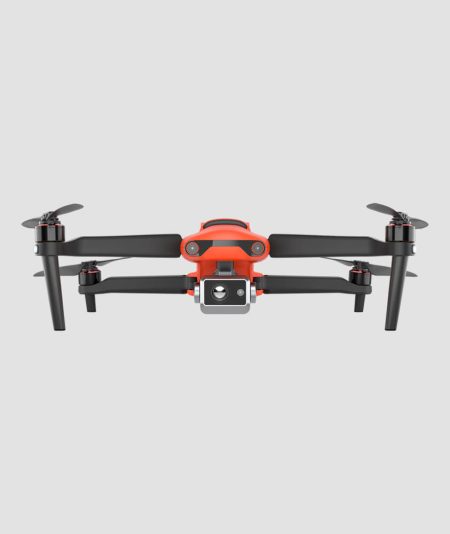
Autel EVO II Series – The World’s First 8K Foldable Consumer Drone!! The Autel EVO 2 Dual offers a camera module that combines an 8K camera with a thermal camera that offers up to 640×512 resolution. The take-off weight is 1.157gr for the EVO II Dual 320 and 1.192gr for the EVO II Dual 640.